Skip to content

Liechtenstein · FMA-approved · Radar deep-tech since 2016

The radar breakthrough that makes autonomous systems actually safe.

When radar misses what's there — or sees what isn't — people get hurt. AWEARE eliminates 80–95% of the ghost targets that overwhelm modern driver-assistance and autonomy. Same hardware. Cleaner data. Safer cars, drones and aircraft.

80–95% ghost reduction · 2–3× resolution · same 24 / 77 GHz hardware

FMA-approved · BDO-valued · Independently verified

Standard output

Legacy radar: high noise (ghosts) and low resolution. Struggles to separate or classify objects.

AWEARE waveform

Processed output

250m+ range · all-weather

Loading radar comparison…

Scenario / range

Environmental conditions

Drag either view to rotate · use the controls below · Open full screen

Bottom line up front

Autonomous systems are failing because radar gets overwhelmed. We're the first company that fixes that.

Modern radar floods the AI with hundreds of thousands of phantom objects. The AI then guesses — and sometimes guesses wrong. AWEARE eliminates the phantoms before the AI ever sees them, with the same chips automakers and defense suppliers already buy.

Why this matters now

When radar misses something, something severe happens.

The cost of a confused radar isn't a software bug — it's a real-world incident. These are three from the last four years.

2022 · Bay Bridge, San Francisco Cars

An eight-car pileup triggered by phantom braking.

A vehicle on autopilot braked and changed lanes for an obstacle that wasn't there. Eight cars piled in behind it. Nine people were injured, including a two-year-old. The technical pattern — radar reporting a ghost target the AI trusted — is the failure mode AWEARE eliminates at the source.

Phantom-braking incident report

2025–2026 · International airports Aerospace

Drones evade airport radar, ground hundreds of flights.

Repeated drone intrusions at major airports — including Dubai, Frankfurt and Copenhagen — have grounded fleets and stranded travellers. Airport perimeter radars miss small, slow-moving targets buried in clutter. AWEARE's ghost-rejection waveform makes those targets visible.

2026 · Tesla HW3 retrofit Cars

Tesla concedes HW3 cars need a hardware swap to ever drive themselves.

Elon Musk admitted the Hardware-3 computer Tesla sold from 2019 with a $10,000 FSD upsell does not have the memory bandwidth for unsupervised driving. Customers face computer + camera replacements at Tesla's pace and cost. AWEARE upgrades arrive as a firmware update — not a customer-borne hardware swap.

Heise — Tesla HW3 admission, May 2026

Three different domains. Same root cause. Radar saw something that wasn’t there — or missed something that was.

Ghost targets eliminated
80–95%

AWEARE lab measurements

Better range & velocity resolution
2–3×

vs commercial FMCW radar

Phantom returns removed in a typical urban scene
300k+ / 380k

Kraus et al., 2021 dataset

Less AI compute needed for scene-building
30%+

AWEARE technical analysis

The breakthrough

We solve the ghost problem where it starts.

Three things make AWEARE different from every 'radar+AI' story you've heard. There's no neural net cleaning up bad data; the data is clean before it leaves the radar.

Processing at the source

Hardware-level filtering, not software clean-up.

Other approaches let the radar produce noisy data and then ask the AI to figure it out. AWEARE filters the noise inside the radar itself — before the AI ever has to make a guess.

  • Physics-based, not statistical
  • Runs in DSP, not in a neural net
  • Auditable for safety certification

Hardware-agnostic

Plug-and-play with the chips you already buy.

AWEARE works with the same low-cost 24 GHz and 77 GHz radar chips that ST, NXP, TI and Infineon already sell. Same antennas, same RF, same vehicle bus. The waveform is the only thing that changes.

  • No new sensors, no new ECU compute
  • Ships as a firmware-style update at the radar SoC
  • Active discussions with leading chipset suppliers

Cleaner. Sharper. Better.

Faster AI. Lower cost. Safer outcomes.

When the radar lies less, the AI thinks less. That makes autonomy cheaper to build, cheaper to certify and dramatically safer. The same waveform helps a fleet save fuel, an airport see a drone, and a car not phantom-brake on the freeway.

  • Higher confidence at AEB / ACC / LKA
  • Drone & UAS detection at airports
  • Sensor fusion with camera & cheap LiDAR

Independent verification

The technology is beyond the state of the art.

From our founder

Why we started AWEARE — in Daniel's own words.

The radar in your car was built for a simpler problem. When ADAS started steering and braking on its own, phantom targets stopped being annoying and started being dangerous. Two minutes from our founder.

Daniel J. Hyman, Ph.D. · Founder · AWEARE Global AG

Watch on YouTube

Veteran team

Builders, not pitchers.

Decades of shipped radar, aerospace and AI products. The team that built the demonstrators is the team that runs your pilot.

Daniel J. Hyman, Ph.D.

Daniel J. Hyman, Ph.D.

Radar & wireless · Founder

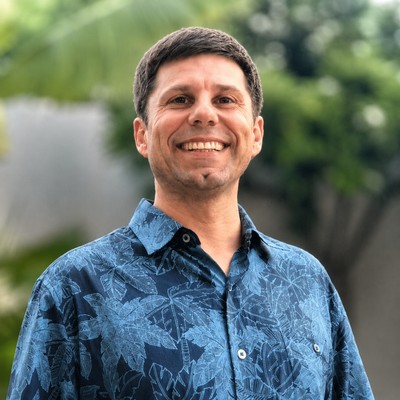
30+ patents in sensors, security, aerospace and defense. Inventor of DRONEKILLER® — deployed worldwide; >1,000% ROI exit for early investors.

Mahesh Reddy

Mahesh Reddy

Aerospace executive

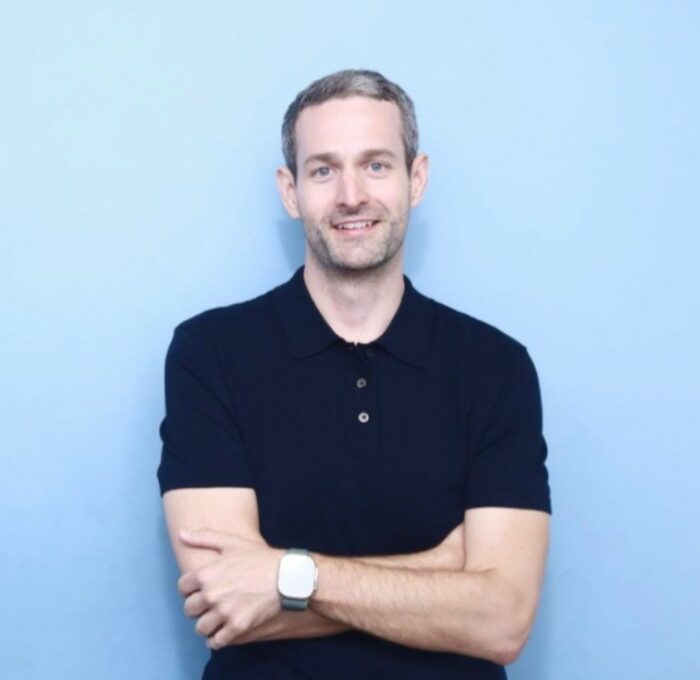
Decades of executive experience integrating new technologies into Rockwell Collins and Boeing programs.

Mark K. Hyman

Mark K. Hyman

Software & AI executive

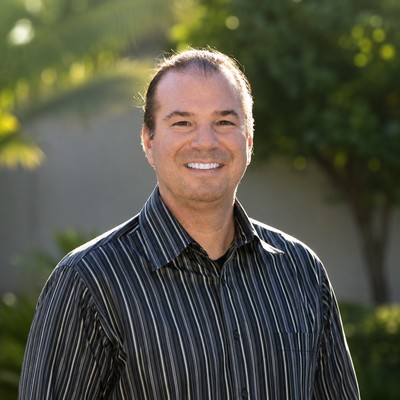
AI control systems and embedded software leadership across automotive and defense product lines.

Marcel Füssinger

Marcel Füssinger

Finance director

Liechtenstein-based capital structuring; blockchain-backed securities and FMA-supervised token issuance.

Built to integrate with the radar ecosystem

STMicroelectronicsTexas InstrumentsNXPInfineonBoschContinentalDensoMobileyeSTMicroelectronicsTexas InstrumentsNXPInfineonBoschContinentalDensoMobileye

Names listed reflect the radar ecosystem AWEARE is built to integrate with — not endorsements or active partnerships unless explicitly noted.

What we're building

AWEARE is the missing safety layer the industry has needed for years.

If you build cars, drones, airport defense or the chipsets that go inside them — talk to engineering. We move in pilots, not quarters.